
· by Michael Blair, Nashville's Plumbing Repair
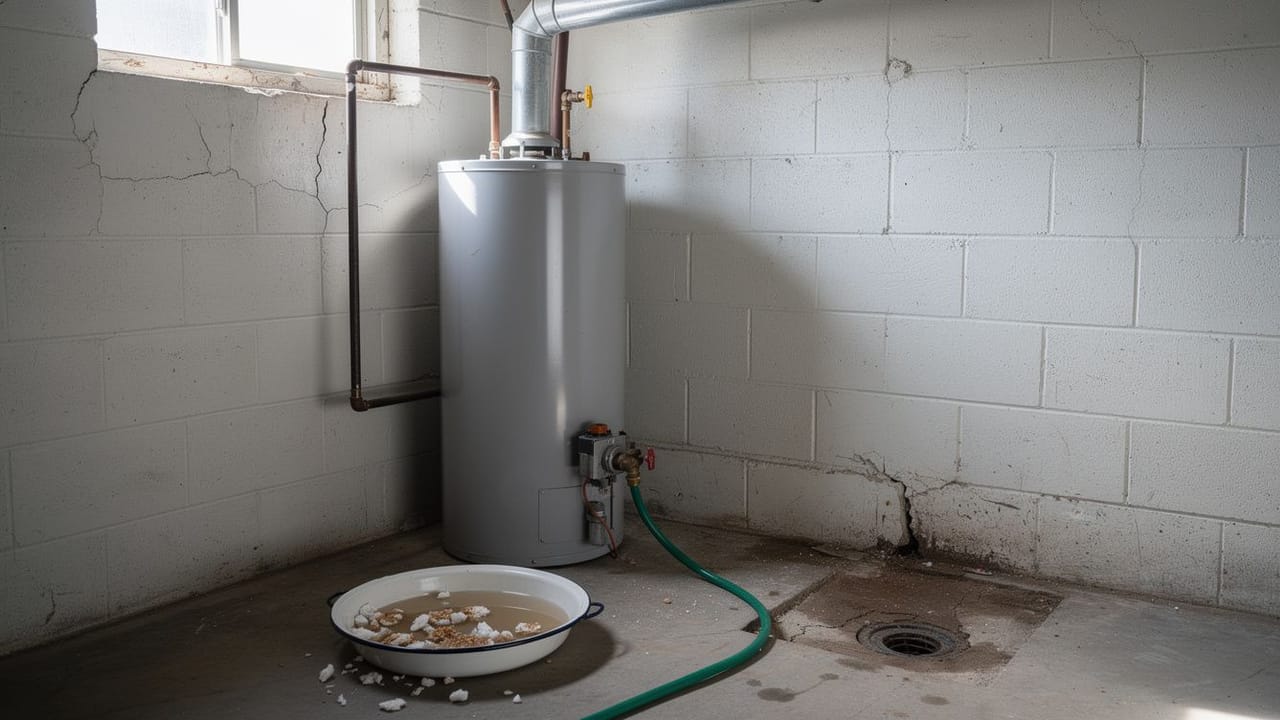
A water heater that bangs, pops or rumbles is usually telling you about sediment. A. O. Smith’s guide to why a water heater makes noise traces popping to steam bubbles forcing their way through mineral deposits on the bottom of the tank, and rumbling to sediment that has piled up far enough to block the water moving inside it. What matters is telling that ordinary scale noise apart from the two sounds that point somewhere else, one of which can mean the tank is finished.
What the rumble actually is
Nashville’s water is moderately hard. Metro Water Services’ 2025 Consumer Confidence Report puts average total hardness at 100.5 mg/L, mostly dissolved calcium from the limestone in Tennessee and eastern Kentucky, and notes that the treatment process does not remove it. When hard water is heated, as the USGS explains in its page on water hardness, solid deposits of calcium carbonate can form, and in a tank heater they settle to the bottom. A. O. Smith says steam bubbles get trapped under that layer and have to fight their way up through it. That is the popping. If you are on a different utility or a private well, your number will be different, and worth looking up.
The noise is only the symptom. The USGS says scale can shorten the life of equipment, raise the cost of heating the water and clog pipes, and A. O. Smith’s water heater maintenance checklist says sediment reduces efficiency and accelerates tank wear. The layer sits between the heat and the water, so the heater runs longer to reach the same setting, and you pay for that every cycle.
Will flushing a water heater stop the popping?
A. O. Smith’s guide to a hot water heater making noises calls a flush the best cure for a popping tank, and suggests at least once a year, more often with hard water. The interval for your own heater is in its manual: Bradford White’s FAQ says recommended maintenance is listed in the service manual that came with the heater. The steps in that A. O. Smith guide start with the heater turned off, the cold supply closed and the tank left to cool, then a hose on the drain valve and the cold supply opened again to push the last of the sediment out. The checklist’s test for done is water that runs clear. On a heater that has never been flushed, expect grit and expect it to take a while.
Sometimes it does not go that smoothly. The checklist warns that sediment can clog the drain valve itself, which is why a technician comes ready to clear it or replace the valve. And A. O. Smith says that if the sounds carry on after a flush, something inside has likely failed; its page on repairing or replacing a water heater names a failing heating element or a cracked tank. If the water will not run clear, the valve clogs or the noise survives the flush, that is a job for our water heater repair service.
Which water heater noises are not sediment?
A sharp bang right after a tap or an appliance valve shuts is usually water hammer. A. O. Smith describes fast-moving water stopping suddenly, like when a valve slams shut, and the shock wave banging through the pipes into the tank, and it says water entering the tank under high pressure can cause the same banging. Its noise guide suggests a water hammer arrestor, which adds some shock absorption. If the pressure coming into the house is high to begin with, that deserves its own look, and our post on high water pressure covers how to find out what yours is running at.
A hiss or a sizzle is a different matter. On a gas heater, the checklist says it might indicate water dripping onto the burner and warrants immediate professional inspection for safety, so we treat it as a same-day call. Water leaking from the tank itself, in A. O. Smith’s words, usually means rust has eaten through the metal and the heater needs replacing. Whistling and screeching have their own causes depending on the heater, from a dirty blower wheel or a blocked vent on models with a blower to worn parts. And if you smell gas near the heater, A. O. Smith treats it as an emergency that needs a professional right away.
How long does a water heater last?
A. O. Smith puts the average life expectancy of a water heater at about 8 to 12 years, varying with the installation, the maintenance and the water quality, and says one that is more than 10 years old, leaking around the base or running erratically is probably due for replacement. A noisy heater well short of that age is worth flushing and keeping. Near the ten-year mark, the noise is a reasonable prompt to start pricing a replacement while you still have hot water and can choose rather than react, including whether a tankless unit makes sense in water like ours.
Tankless units scale too, just in a different place. Rinnai’s residential FAQ says mineral buildup can erode the walls of the heating chamber and that the deposits should be flushed at least once a year. A. O. Smith sells a cartridge for some of its ADAPT gas tankless heaters meant to prevent scale and end the need for annual descaling, and its limited gas tankless warranty excludes damage due to a lack of maintenance, scale and mineral buildup included.
On a tank heater the anode rod is the other clock. The checklist says to inspect it once a year and have a professional examine it every 5 years, and that once the rod is mostly gone or 6 inches of core wire shows, the tank starts rusting from the inside out. Our post on hot water that smells like rotten eggs covers the other trouble a rod can cause. We look at the rod and the base of the tank before we recommend a flush on an older heater, and if you want that read on yours, tell us how old it is and what it sounds like.
Sources
- Metro Water Services (Nashville), 2025 Consumer Confidence Report — Nashville’s water considered moderately hard; total hardness 100.5 mg/L (2023 data); mostly dissolved calcium from limestone; treatment does not remove hardness
- USGS Water Science School, Hardness of Water — Heated hard water forms calcium carbonate deposits in a water heater; scale shortens equipment life, raises heating costs and clogs pipes; 61 to 120 mg/L is moderately hard
- A. O. Smith, Why Your Water Heater Might Be Making Noise — Popping and rumbling from sediment; water hammer and high pressure cause banging; tank leaks mean rust through the metal; noise after flushing means a failed part; gas smell is an emergency
- A. O. Smith, What to Do When Your Hot Water Heater Is Making Noises — Flushing is the best cure for popping; flush at least once a year, more often with hard water; flushing steps; water hammer arrestor; blower wheel or vent behind screeching
- A. O. Smith, Water Heater Maintenance Checklist — Sediment not dangerous but reduces efficiency and accelerates tank wear; hissing near a gas burner warrants immediate inspection; drain until clear; clogged drain valves; anode inspection yearly and every 5 years
- A. O. Smith, Repair or Replace? — Average life expectancy about 8 to 12 years; replace past 10 years or with leaks at the base; noise after repair can mean a failing element or a cracked tank
- Bradford White, FAQs — Recommended maintenance is listed in the heater’s service manual
- Rinnai America, Residential FAQ — Tankless mineral buildup can erode the heating chamber; flush at least once a year
- A. O. Smith, ADAPT Residential Gas Tankless Water Heater Installation Instructions and Use & Care Guide (2024) — X3 cartridge to prevent scale and end annual descaling; periodic relief valve discharge may be thermal expansion in a closed system
- A. O. Smith, Limited Gas Tankless Water Heater Warranty — Excludes damage due to a lack of maintenance, including scale or mineral buildup
FAQ
Why Your Water Heater Bangs, Pops and Rumbles — questions
Is a noisy water heater dangerous?
The popping and rumbling of sediment usually is not. A. O. Smith’s maintenance checklist calls sediment not dangerous, though it reduces efficiency and wears the tank faster. The sounds worth acting on quickly are a hiss or sizzle near a gas burner, which A. O. Smith says may be water dripping onto it, a high-pitched screech or whistle, which it says needs immediate attention, and a temperature and pressure relief valve that discharges again and again, which A. O. Smith’s tankless manual says can come from thermal expansion in a closed water system. Have a plumber check any of those promptly, and call right away if you smell gas.
How often should a water heater be flushed in Nashville?
Start with the interval in your heater’s manual, which Bradford White says is where recommended maintenance is listed. A. O. Smith’s general advice is at least once a year, and more often with hard water. Metro Water Services describes Nashville’s water as moderately hard and says treatment does not remove the hardness. If yours has gone years without a flush it is still worth trying, and if the drain clogs or the water will not run clear, have a plumber look at it.
Does a tankless heater have the same problem?
Not sediment in a tank, because there is no tank. Rinnai says a tankless heater can build up minerals that erode the walls of its heating chamber, and recommends flushing them out at least once a year. Some models are built to avoid it: A. O. Smith sells a cartridge for certain ADAPT units meant to remove the need for annual descaling. Check your warranty as well, since A. O. Smith’s gas tankless warranty excludes damage from scale or mineral buildup.
Why is my water heater making popping noises?
Usually sediment on the bottom of the tank. Heated hard water leaves calcium carbonate deposits, and A. O. Smith says steam bubbles get trapped beneath that layer and pop as they force their way up. A flush is the cure it recommends, and if the popping carries on after a flush, a part inside has likely failed.