
· by Michael Blair, Nashville's Plumbing Repair
Tankless water heaters outlast tank units, and they keep heating for as long as the tap runs. The longer life is real but smaller than the pitch suggests: the Department of Energy’s 2024 rule on gas tankless water heaters puts their average life at about 20 years against about 14.5 for a gas tank, and its rule for consumer water heaters estimates around 15 years for storage heaters. That is about a third longer, not double. What the pitch leaves out is the water. Metro Water Services’ 2025 water quality report calls Nashville’s water moderately hard, with total hardness averaging 100.5 milligrams per liter, and at that hardness the maintenance a tankless unit needs to reach its lifespan is not optional. The installation is rarely a straight swap either.
Can a tankless heater go in where the tank was?
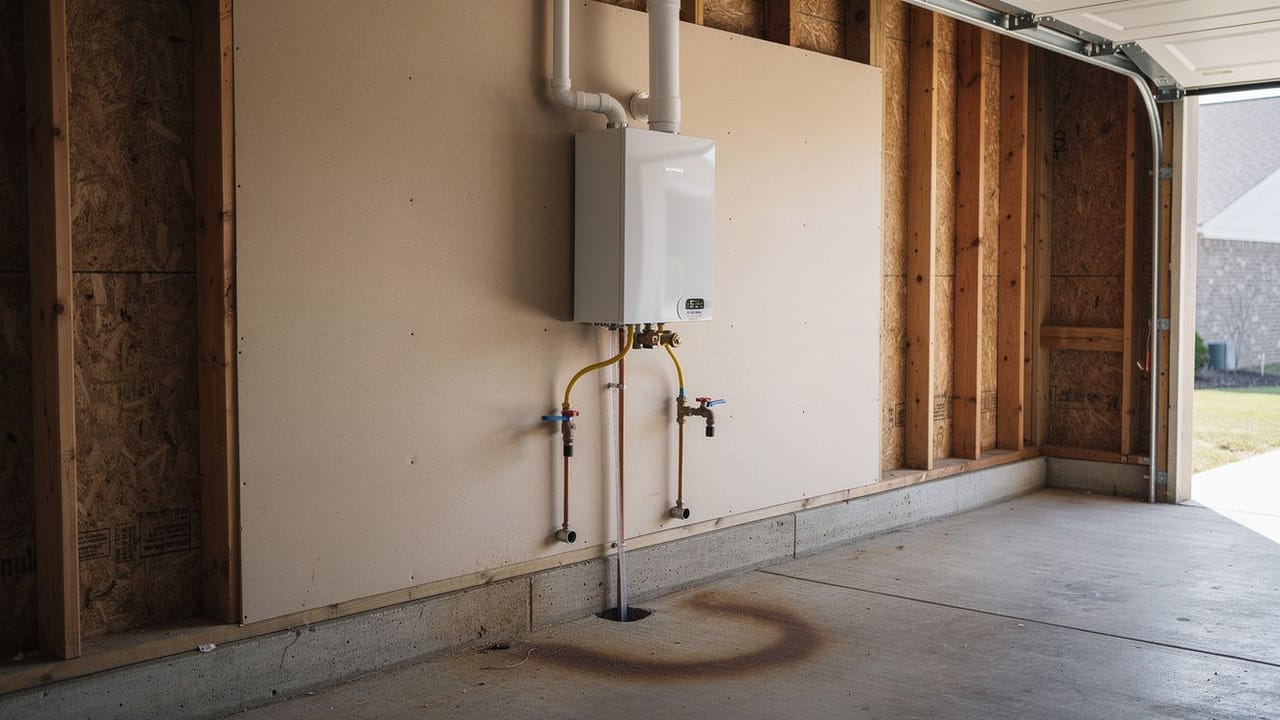
A tankless unit is not a like-for-like replacement. ENERGY STAR’s page on whole-home gas tankless heaters says the installer has to work out whether your existing gas line is sufficient, whether there is electricity near the heater for a forced-vent model, and how the combustion gases will be vented. The vent material depends on the unit. DOE’s tankless rule describes non-condensing models as needing stainless steel vent, while condensing models can vent through PVC, CPVC or polypropylene. Condensing units also produce condensate that has to go somewhere, and Navien’s NPE-A/S installation manual warns that installing its heater in a spot without a drain voids the warranty.
That is why quotes vary so widely. A house where the gas line, the vent path and a drain are all easy is a straightforward job. A heater in a closet in the middle of the floor plan is another matter, because the new vent has to find its way to an outside wall from there. Those three things are what we look at first when we quote a water heater replacement, and if the gas line falls short, our post on when a gas line needs a plumber explains how that part of the job is sized.
Where hard water changes the answer
In a tank heater, the deposit has a whole tank floor to settle on, and what that sounds like is the subject of our post on water heaters that bang, pop and rumble. A tankless unit heats the water as it passes through a heat exchanger, and that is where the scale builds instead. Navien’s NPE-2 user’s manual lists overheating codes for the heat exchanger and the exhaust whose fix includes flushing the heat exchanger, and its warranty excludes damage from hard water deposits and mineral build-up.
The fix is a descaling flush. Navien’s installation manual puts water between 61 and 120 mg/L in its moderately hard band and recommends a flush once a year when no treatment device is installed, which puts a typical Nashville house on an annual schedule. That is one maker’s schedule, and other brands publish their own. The user’s manual walks through the job: a circulation pump, a bucket, three hoses and a cleaning solution run through the heat exchanger for at least 45 minutes, by way of service valves on the water lines, and it warns that improper maintenance can void the warranty. Ask for those isolation valves at installation, since a unit fitted without them needs them added before it can be flushed properly.
Which houses suit a tankless water heater?
Tankless makes sense in a household that genuinely runs out of hot water, as long as the unit is sized for it. Its supply is continuous but not unlimited: ENERGY STAR’s key product criteria set a floor of 2.8 gallons a minute over a 67-degree rise for a certified gas tankless model, and the installer is meant to confirm the flow rate your house needs. It also earns its place where floor space is worth money, since DOE’s rule notes that storage heaters take up more room, and in a house you mean to keep long enough to see the longer life. A household already in the habit of booking annual service is the easiest fit of all.
We usually point people toward a tank for a straightforward replacement in a house they may not keep long enough for the extra years to count. The same goes for a household whose hot water demand is comfortably met today, and for anyone honest with themselves about not booking a yearly flush.
The softener question
A softener changes the maintenance picture on a tankless unit. Navien’s installation manual recommends a water softener, or its own treatment system, for moderately hard water, and it ties the annual flush to units that have no treatment device. It only requires treatment above 12 grains per gallon, roughly double Nashville’s average. On a tankless installation here, a softener is worth pricing at the same time, because the two decisions interact, and the same manual says to check local codes for any restrictions on softeners first.
At our hardness it is not a requirement. It is a trade between one larger up-front cost and a maintenance habit you have to actually keep, and we can price both versions when you ask us for a free estimate.
Sources
- Metro Water Services, 2025 Consumer Confidence Report — Nashville water is moderately hard; total hardness 100.5 mg/L (17.1 mg/L = 1 grain per gallon); hardness table labelled 2023 data
- U.S. Department of Energy, Energy Conservation Standards for Consumer Gas-fired Instantaneous Water Heaters, 89 FR 105188 (2024) — Average life about 20 years for gas tankless against about 14.5 for gas storage; stainless vent for non-condensing, PVC, CPVC or polypropylene for condensing; storage heaters need more space
- U.S. Department of Energy, Energy Conservation Standards for Consumer Water Heaters, 89 FR 37778 (2024) — Average life around 15 years for storage water heaters
- ENERGY STAR, Whole Home Tankless Gas Water Heaters — Installer checks gas line, electricity for forced-vent models, venting and flow rate; heating water only when needed cuts water heating costs
- ENERGY STAR, Residential Water Heaters Key Product Criteria — Gas tankless criteria: minimum 2.8 gallons a minute over a 67-degree rise
- Navien, NPE-A/S Series Installation Manual (Rev. 9.11.2023) — Annual flush at 61-120 mg/L without a treatment device; softener recommended, required above 12 grains per gallon; check local codes on softeners; no drain voids the warranty
- Navien, NPE-2 User’s Information Manual — Overheating codes fixed by flushing the heat exchanger; flush procedure with pump, hoses and service valves; warranty excludes hard water deposits and improper maintenance
FAQ
Tankless vs Tank Water Heaters in Hard Water — questions
How long does a tankless water heater last in Nashville?
The Department of Energy estimates that a gas tankless heater lasts about 20 years on average, against roughly 14.5 to 15 years for a tank. In Nashville’s moderately hard water that depends on descaling. Navien calls for a flush once a year at our hardness when there is no water treatment, its heaters show overheating codes when the heat exchanger needs flushing, and its warranty excludes damage from mineral build-up. The lifespan is real; it is conditional.
Will a tankless heater lower my gas bill?
Usually, because it heats water only when a tap calls for it instead of keeping a tank hot around the clock, and ENERGY STAR says certified gas tankless models cut water heating costs. How much depends on the house and how it uses hot water, so we would not choose one on the gas bill alone. The steady supply, the space and the longer life are better reasons.
Can I put a tankless unit where the old tank was?
Sometimes, and that is the simplest version of the job when it works. It depends on whether the existing gas line is sufficient, whether a vent route exists from that spot, whether there is power nearby for a forced-vent model, and, for a condensing unit, whether a condensate drain can be run. A plumber can tell you in one visit, and it is worth asking before you get attached to the idea.
How long does it take to flush a tankless water heater?
The descaling run alone takes at least 45 minutes in Navien’s procedure, with a cleaning solution pumped through the heat exchanger by a circulation pump, a bucket and three hoses connected at the service valves. A unit installed without those isolation valves needs them added before it can be flushed properly, so ask for them at installation.