
· by Michael Blair, Nashville's Plumbing Repair
A water bill that suddenly runs high sends most people to the same question: is something leaking, or did we just use more? The cheapest way to find out is the water meter, and among plumbers in Nashville, the version I want to walk through belongs to Prodigy Plumbing & Drain, which has an office in Franklin. Its site has a free tool called Leak Detective that takes you through the test with a stopwatch. The numbers below are my own arithmetic on how it behaves.
Is a high water bill a sign of a leak?
It can be, and the meter settles it faster than the bill does. The EPA’s WaterSense program says leaks in the average household can waste more than 9,300 gallons a year, and that 9 percent of homes have leaks losing 50 gallons or more a day. A bill can also climb for reasons that have nothing to do with a leak. With every fixture off, though, there is no ordinary reason for water to pass through the meter.
What the tool has you do
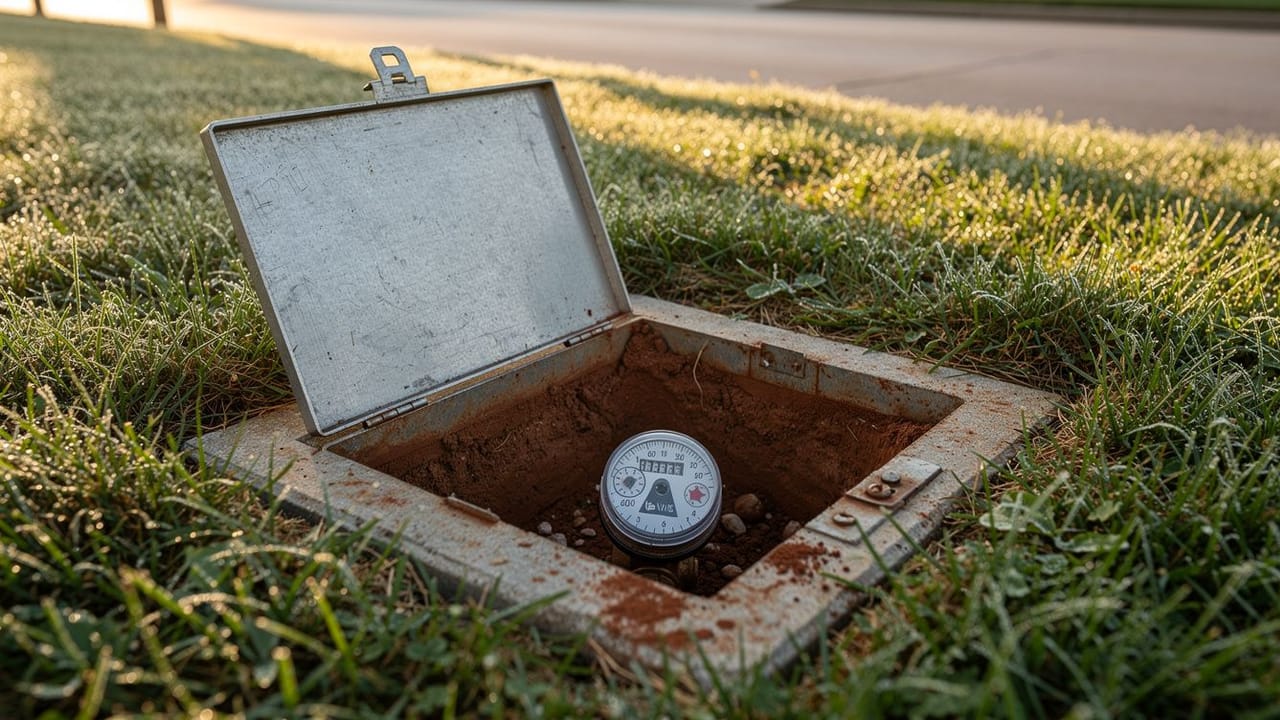
Leak Detective starts with a checklist: dishwasher, washer, ice maker and sprinklers off, no toilet running, nobody in the shower, the softener not regenerating, the meter lid open. You choose whether your meter counts gallons or cubic feet, enter the reading, pick a wait of 15 minutes, 30 minutes or 1 hour, and let the timer run. Then you enter the second reading and say whether the small leak indicator is moving.
It returns the gallons that moved and projects them out to gallons a day. Your readings stay in your browser until you choose to send them, the company says. The test costs nothing, and you don’t have to give anyone your number to use it. Leak Detective is one of eight on the site, along with a sound decoder and a water pressure gauge.
Which wait should you pick for a water meter test?
The hour, unless the indicator is already spinning. Here is why. A leak of 50 gallons a day, the EPA’s line above, moves about half a gallon in 15 minutes, about one gallon in 30, about two in an hour and about four in two hours. If your meter reads in cubic feet, the tool’s conversion of 7.48 gallons to the cubic foot makes that half gallon about 0.07 of a cubic foot, which is easy to miss if you are copying down the full number.
That choice is the useful part of the tool. Its stronger alert appears when more than 3 gallons moved, which is about 288 gallons a day on the 15-minute wait and about 72 on the hour. So you can take a fast reading on a big leak or give a small one time to show, and the indicator question catches what the dial hasn’t shown yet.
If an hour shows nothing and the bill is still high, use the EPA’s version, which is two hours with no water used at all. An evening when everyone is out works well.
If the dial moved, what do you check first?
Toilets. The tool says to put a few drops of food coloring in each tank and look in the bowl after 15 minutes, and the EPA gives the same test at 10 minutes; color in the bowl is a leaking flapper. Our post on a toilet that refills by itself at night covers what is going on inside the tank. After that the tool sends you to ice maker, softener and humidifier lines, outdoor spigots, sprinklers and irrigation valves, and anything dripping.
If none of those explain it, the tool’s advice is that there may be a hidden leak in the supply lines, and to keep the main valve closed when the house is empty until someone has checked. Our notes on slab leak signs and repair choices and our leak detection service pick up from there.
If Metro Water bills you, two things are worth knowing. It lists plumbing leak investigation among services at no extra charge, and it says on its assistance page that a concealed leak may qualify you for a bill adjustment, with the type and date of the repair reported afterward. Another utility may do it differently, so ask yours before you pay for repairs.
What else do these plumbers in Nashville and Franklin handle?
Most of what a house or a business can throw at them. Prodigy Plumbing lists 50 services in nine groups: repairs and leaks, water heaters and hot water, pipes and valves, fixtures for kitchens and baths, drain and sewer, water quality, commercial and property work, 24/7 emergencies, and remodels, new builds and rentals.
Its office is at 504 Fall Springs Ct, Suite 16, in Franklin. The company says it is open 24 hours, seven days a week, and serves Nashville plus 33 more Middle Tennessee cities and eight Nashville neighborhoods, Belle Meade, Green Hills, East Nashville and 12 South among them. The company says it listens, diagnoses, and tells you the options and what each one means before any work begins.
That is the reason to call once the dial has moved and the toilets are ruled out. You get to the phone already knowing how many gallons a day are going missing, and the tool will carry your result to them in a form if you would rather write than talk.
Sources
- EPA WaterSense, Fix a Leak Week — Household leak estimates, the two-hour meter test and the toilet dye test.
- Metro Water Services, Other Services — Plumbing leak investigation at no extra charge.
- Metro Water Services, Assistance and Protection Programs — Concealed leak adjustments and reporting a repair.
FAQ
Plumbers in Nashville With a Free Leak Test: Prodigy — questions
Why is my water bill suddenly so high?
Either you used more water or something is leaking, and a meter test separates the two. Turn off everything that uses water, read the meter, wait an hour without using any, and read it again. If the number or the small indicator moved, water is going somewhere you aren’t using it.
How long should I wait when testing my water meter for a leak?
An hour at least, and two if you can manage it. The EPA’s test runs two hours. A 50-gallon-a-day leak moves only about half a gallon in 15 minutes, which is easy to miss on the main number, so a short test is better for a quick look than for a final answer.
Which plumbers in Nashville offer a free water leak test?
Prodigy Plumbing & Drain, with an office in Franklin, offers one you run yourself: Leak Detective, a browser tool with a checklist and a stopwatch. The company says nothing you enter is sent anywhere until you choose to send it, and a moving dial is the point to call them.
Does a spinning leak indicator on a water meter always mean a leak?
It means water is moving past the meter, which is not the same as a broken pipe. A running toilet, an ice maker line or a softener can spin it too, according to the Leak Detective page. Check those first, then test again with them shut off before you start looking for a hidden leak.
How much water can a household leak waste in a year?
More than 9,300 gallons in the average household, according to the EPA’s WaterSense program, and 9 percent of homes have leaks losing 50 gallons or more every day. A slow toilet flapper or a dripping fixture can account for it, which is why the small ones are worth chasing down early.