
· by Michael Blair, Nashville's Plumbing Repair
A single weak faucet is almost always that faucet: a clogged aerator or a worn cartridge. When the shower, the kitchen sink and the hose bib all run weak at the same time, the cause is upstream of all of them, and it sits in one of three places. Either the water reaching the meter is low, or the pressure-reducing valve on your main line is holding back too much, or something in the pipe between the meter and the fixtures is costing you flow. Here is the order we check them in on houses around Nashville, and what each answer points to.
Is low water pressure in the whole house the city’s problem or mine?
Low pressure in the whole house is the city’s problem when the neighbors have it too, and yours when they do not. Start with Metro Water Services’ outage map, which shows the water main breaks being worked on, then ask a neighbor or two whether their water is weak. A main break nearby explains a sudden drop across a whole street, and there is nothing to fix on your side until it is repaired.
Timing matters too. Metro Water’s October 2026 article on morning pressure explains that heavy demand, much of it sprinkler systems running into the early morning, makes water move faster through the mains and lowers pressure, with higher elevations feeling it most. Weak water at 7 a.m. that is fine at noon points to the system. Weak water all day, every day, in one house on the street points inside the property line.
What does Metro Water check for free?
Metro Water checks the service line’s flow for free, along with several other things a homeowner might otherwise pay to rule out. Its customer services page lists service line volume flow testing, which measures how much water moves through your service line, along with plumbing leak investigation and meter testing, all at no extra charge, booked through the number on that page.
That test is worth asking for before anyone opens a wall, because it separates the two halves of the problem. If the volume coming through the service line is low, the restriction is at or before the meter, or in the line from the meter to the house. If the service line flows well and the fixtures inside are still weak, the cause is inside the house, which is where we come in.
Can a failing pressure-reducing valve cause low water pressure?
A failing pressure-reducing valve can cause low water pressure, although most people only hear about these valves letting pressure run too high. The City of San Diego’s FAQ for its pressure-reducing valve rebate program lists a sudden loss of water pressure and an unexplained loss of flow among the common signs that a valve is starting to fail, alongside surges and dripping faucets. It says a minor adjustment may resolve the loss, and that as a valve ages it often becomes hard or impossible to adjust, at which point it should be replaced.
We put a gauge on a hose bib with everything in the house off, then open a few fixtures and watch how far the reading falls. A valve set too low reads low at rest; a valve with a clogged inlet screen or a sticking seat can read normal at rest and sag badly once water starts moving. Our post on water pressure that is too high covers the same valve from the other direction.
What else drops pressure at every fixture at once?
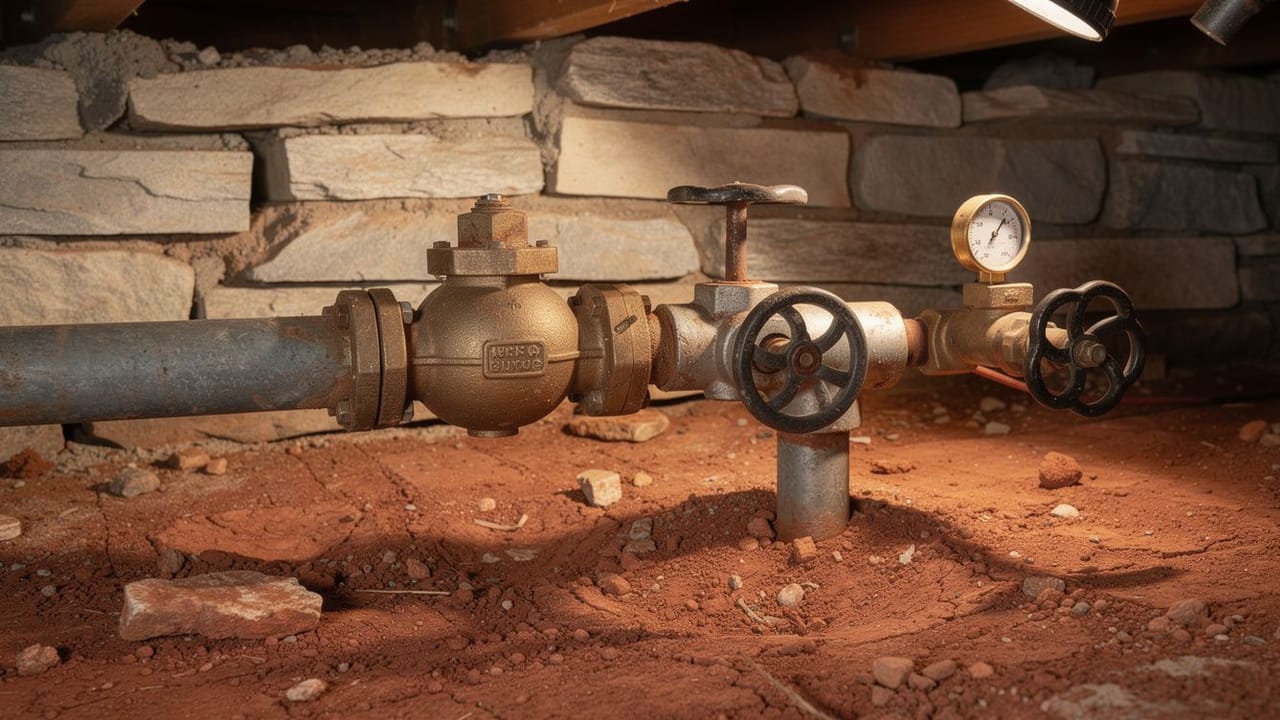
When the street and the valve check out, three causes are left, and we check the simplest first. The main shutoff may be partly closed, often after other work on the plumbing, and an old gate valve can lose its wedge inside so the handle turns while the valve stays nearly shut. A whole-house filter with a clogged cartridge restricts every fixture behind it. And a leak between the meter and the fixtures takes flow before it reaches them; our leak detection starts with the meter, and our post on slab leak signs covers leaks under the floor.
The last cause is the pipe itself. In older houses we still find galvanized steel water lines, and on the ones we cut out the inside has often built up enough that the opening is a fraction of the pipe’s size. No valve or adjustment brings that flow back. When the gauge and flow readings point there, the fix is repiping the water lines, sometimes starting with the main line from the meter. To have the pressure in your house measured and traced, ask us for an estimate.
Sources
- Metro Water Services, Outage Map — Map of active water main breaks
- Metro Water Services, The Surprising Reason Your Shower May Lose Pressure (October 6, 2026) — Heavy demand, much of it irrigation, raises velocity and friction and lowers pressure; higher elevations feel it most
- Metro Water Services, Customer Services — Service line volume flow testing, plumbing leak investigation, meter testing and meter reread provided at no extra charge
- City of San Diego Public Utilities, Pressure Reducing Valve (PRV) Rebate Program FAQ — Signs of a failing PRV include surges, higher pressure, dripping faucets, sudden loss of pressure and unexplained loss of flow; adjustment may resolve; aging valves become hard to adjust and should be replaced
FAQ
Low Water Pressure in the Whole House: Where to Look — questions
Why is my water pressure suddenly low in every faucet?
A sudden drop at every fixture usually means a main break nearby, a pressure-reducing valve starting to fail, or a leak taking flow. Check Metro Water’s outage map and ask a neighbor first. If the street is fine, a gauge on a hose bib with the house off shows whether the valve is the cause.
What happens when a PRV fails?
It can go either way. The City of San Diego’s rebate FAQ lists rising pressure, surges and dripping faucets as signs of a failing valve, and also a sudden loss of pressure or an unexplained loss of flow. A minor adjustment may fix it, but an old valve that will not adjust should be replaced.
Will Metro Water test my water flow for free?
Yes. Metro Water Services lists service line volume flow testing, which measures how much water moves through your service line, among the services it provides at no extra charge, along with plumbing leak investigation and meter testing. Ask for it before paying anyone to open a wall.
Can old galvanized pipes cause low water pressure throughout the house?
Yes. On the old galvanized lines we cut out, the inside has often built up until the opening is a fraction of the pipe’s size, which costs flow at every fixture downstream. No valve adjustment fixes that; replacing the lines does, sometimes starting with the main line from the meter.
Why is water pressure lower in the morning in Nashville?
Metro Water Services says heavy demand, much of it automatic sprinklers running into the early morning, makes water move faster through the mains, adding friction and lowering pressure, with higher elevations feeling it most. Pressure that is weak at 7 a.m. but fine at midday points to the system rather than the house.