
· by Michael Blair, Nashville's Plumbing Repair
Nashville freezes more often than most people here expect. The National Weather Service’s Nashville climate records average 67 days a year with a low at or below 32°F, most of them in December, January and February, yet the normal January high is still about 49°F. Cold that settles in and stays through the afternoon is the rarer event, so a house can go years without a pipe being tested, and the ones we find split after a cold snap are seldom the ones anyone thought to protect.
Which pipes freeze first in a Nashville house?
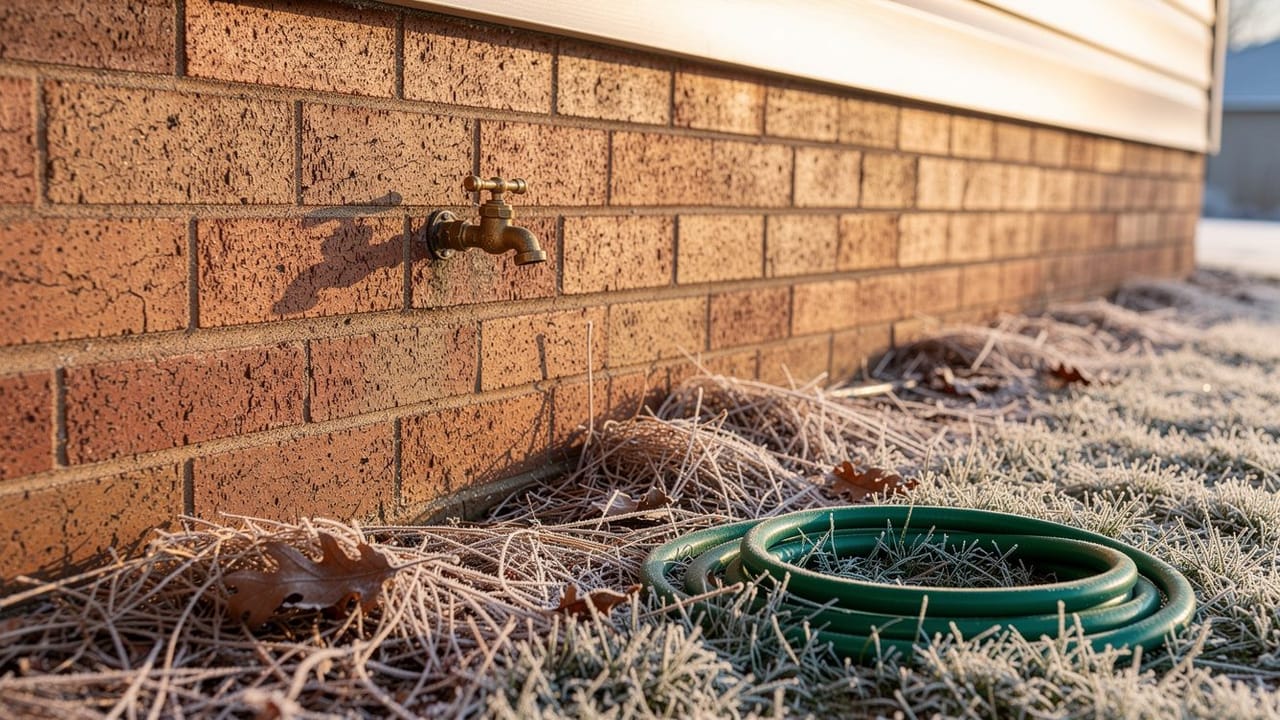
Hose bibs are the first thing we check after a hard freeze. The failure we keep finding is a frost-free bib with a hose still screwed onto it: the valve sits back inside the wall, the hose kept water standing in the stem, and the split stayed hidden until spring, when someone turned the tap on and the water ran into the wall.
After the bibs, we go to the pipes in a vented crawl space, any supply line inside an exterior wall, and plumbing in a wall shared with an unheated garage. If your house has any of those, that is where the preparation below should go first, and it is where our emergency plumbing crews start looking when the call is a burst pipe.
When should you get pipes ready for a freeze?
The Weather Service’s records for the Nashville airport put the average first freeze on November 11 and the average last one on March 31, so early November is the time to get this done. Start with the hoses. Disconnecting them all takes a few minutes, and that goes for frost-free bibs too, since those are the ones we replace with a hose still attached.
FEMA’s Ready.gov winter weather page opens its home preparation advice with insulation, caulking and weather stripping, and tells households to learn how to keep pipes from freezing. For the plumbing, that means foam sleeves on the exposed runs in the crawl space and the garage. Then find the main shut-off and make sure it actually turns, because learning that it has seized while water is coming through a ceiling costs you the minutes that matter. If Metro Water is your utility, save its number as well: the Metro Water Services emergency service page lists 615-862-4600, answered 24 hours a day, for a leak in the street or the meter box or a broken water line in a street or yard.
- Disconnect and drain every garden hose
- Sleeve exposed crawl space and garage runs in foam
- Save Metro Water’s emergency line if it is your utility
- Locate and test the main shut-off
- Open the cabinet doors under exterior-wall sinks on the coldest nights
Should you drip a faucet to keep pipes from freezing?
We suggest it on the coldest nights, as a backup to insulation and never as a stand-in for it. If you do it, use the tap farthest from where the water line comes into the house, so the whole run has water moving through it, and leave it at a thin, steady stream.
As a habit for the whole season it mostly wastes water. The normal highs in the Weather Service’s Nashville records run from about 49°F to 54°F across December, January and February, so a tap left open from December to March spends most of its time running on days that never needed it. A run that freezes every winter needs insulation or a new route through the house, and moving a line like that is part of what we do on our repiping and water line work.
If a pipe has already frozen
A tap that gives nothing on a cold morning while the others run points to one frozen line, and it may not have split yet. Turn the water off at the main first, then open the affected tap so melting water has somewhere to go, then warm the run gently with a hair dryer, working from the tap back toward the frozen section.
Never use a torch or any other open flame. Under a house the joists and the insulation sit inches from the pipe, and that is reason enough. If the line has already split, or the frozen section is somewhere you cannot reach, leave the main off and get in touch with us so we can come and find it.
Sources
- National Weather Service Nashville, Nashville Climate Records — 67 days a year with a low at or below 32°F; normal winter highs of about 49°F to 54°F; average first freeze November 11 and last March 31; record low -17°F in January 1985
- FEMA Ready.gov, Winter Weather — Prepare the home with insulation, caulking and weather stripping; learn how to keep pipes from freezing
- Metro Water Services, Request Emergency Service — Emergency line 615-862-4600, 24 hours a day, for a leak in the street or meter box or a broken line in a street or yard
- Tennessee Department of Commerce and Insurance, Homeowners Insurance Information — Homeowners policy covers damage to the house up to the face amount; flood damage is not included (named in the insurance FAQ)
FAQ
Stopping Frozen Pipes in a Middle Tennessee Winter — questions
At what temperature do pipes freeze in Nashville?
Water freezes at 32°F, and the National Weather Service’s Nashville records average 67 nights a year at or below that, with a record low of -17°F set in January 1985. Most of those nights pass without trouble here because the afternoon warms back up. We do not put a single number on it: the calls we get come in cold stretches that stay below freezing through the day, and a bare pipe in an outside wall or a vented crawl space is at risk well before one inside the house.
Should I leave the heat on if I go away in winter?
Yes. Leave it on rather than off, and open the cabinet doors under sinks on exterior walls before you go. There is no one thermostat setting we would promise for every house, since a crawl space or an outside wall can run much colder than the hallway. If the house will be empty for more than a few days in a cold stretch, we recommend shutting the water off at the main and draining the lines.
Does a burst pipe get covered by insurance?
That depends on your policy, so read it or call your agent before winter. The Tennessee Department of Commerce and Insurance describes a homeowners policy as covering damage to the house itself up to the policy amount, and it warns that flood damage is not included. Ask your agent how your policy treats water from a burst pipe, and whether it sets any conditions for a house left empty or unheated.
How do I know if my pipes are frozen?
The giveaway is one tap that gives nothing on a cold morning while the rest run, which points to a single frozen line that may not have split yet. Shut off the main, open that tap and warm the run gently with a hair dryer from the tap back toward the freeze. Never use a torch or open flame.