
· by Michael Blair, Nashville's Plumbing Repair
A leaking toilet gets described as one problem, but a toilet can leak in three different places, and each one is a different part with a different fix. Water on the floor around the base is not the same failure as a drip under the tank, and neither is the same as a tank that quietly empties into the bowl. Before anyone orders parts, the useful step is to find where the water actually is. This is how we sort it out on a call for plumbing in Franklin or anywhere else we work, what a homeowner can do safely in the meantime, and when the repair moves from the toilet to the floor under it. Our toilet and fixture installation service covers the work itself.
Where is the water coming from on a leaking toilet?
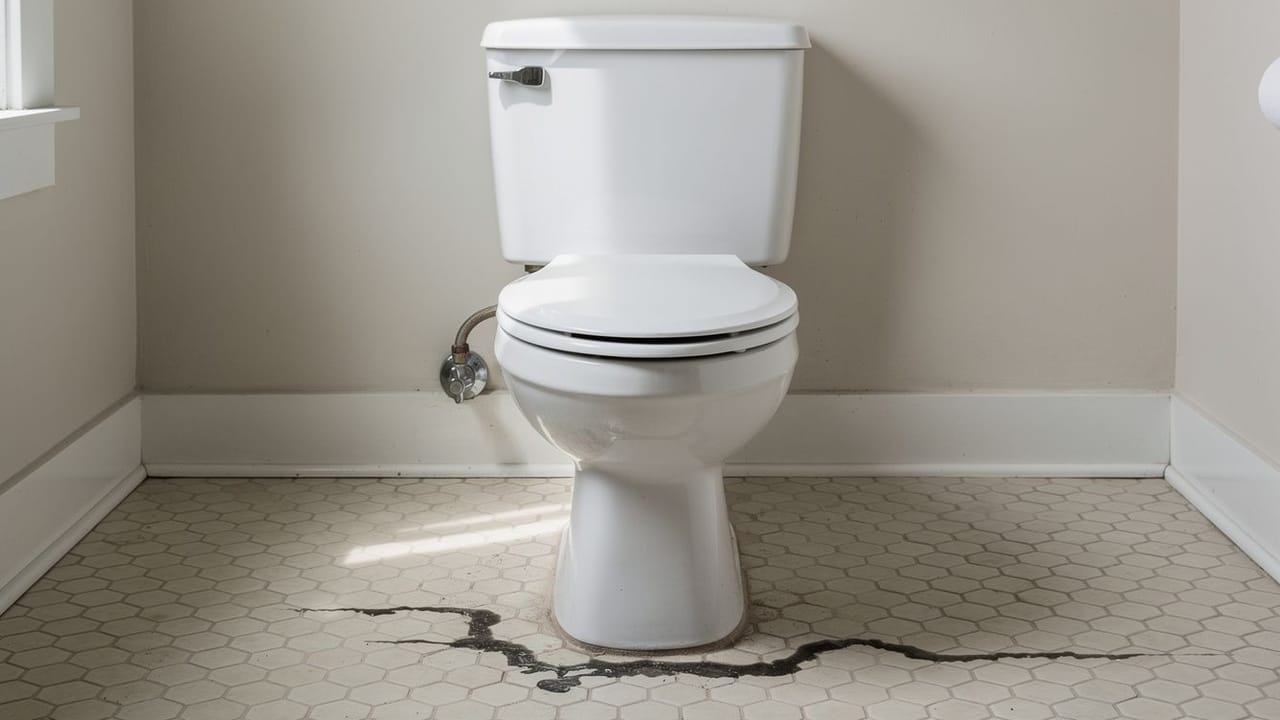
The location of the water names the failed part. Dry the toilet and the floor around it with a towel, flush once, and watch. Water that seeps out from under the foot of the bowl after a flush is coming past the wax seal between the toilet and the floor flange. Drips that start under the tank, at the bolt heads or along the line where tank meets bowl, come from the tank bolts or the gasket between the two pieces. Water at the wall end of the supply line points to the line or the shutoff valve, which is usually the cheapest of the three.
One thing that looks like a leak is not one. In a humid month a cold tank sweats, and the condensation runs down the outside of the tank and drips on the floor in a ring that looks a lot like a base leak. If the outside of the tank is beaded with water and the drips stop when the weather turns, the toilet is fine.
How do you tell if the flapper is leaking into the bowl?
A dye test answers it in a few minutes. The EPA’s WaterSense Fix a Leak Week page describes putting a few drops of food coloring in the tank and checking the bowl after 10 minutes; color in the bowl without a flush means the flapper is letting water through. The agency’s WaterSense Homes “Free of Leaks” tech sheet gives the same test with a dye tablet or food coloring and a wait of 5 to 10 minutes. Either way, flush soon afterward so the color does not stain the bowl.
This leak never shows up on the floor, which is why it runs for months. The tech sheet counts worn toilet flappers among the most common household leaks and puts the waste from an average home’s leaks at nearly 10,000 gallons a year, and the Fix a Leak Week page recommends replacing the flapper at least every five years. If the toilet also refills on its own overnight, our post on why a toilet refills by itself at night walks through the flapper and the fill valve in more detail.
Can you just tighten the bolts on a toilet leaking at the base?
Only if the nuts are loose and the toilet has not moved, and even then only snug. Kohler’s installation guide for its close-coupled toilets warns against overtightening the floor bolt nuts because the vitreous china can break or chip, and it tells installers to tighten the tank bolts only until snug and then check that the tank sits level. A cracked foot or a cracked tank turns a seal job into a new toilet.
The same guide is plain about the seal: once the bowl is set, do not lift or rock it, because a broken watertight seal has to be replaced with a new wax seal. That is the catch with a toilet that rocks. By the time it moves, the wax has usually been pushed out of shape, and tightening the bolts pulls the toilet down onto a seal that no longer seals. The repair is to pull the toilet, scrape off the old wax, fit new bolts and a new seal, set the bowl and press it down evenly with full body weight, which is how Kohler describes setting it, then watch the connections for several days.
When does a leak at the base mean the floor needs work?
When the flange under the toilet is broken, loose or sitting on soft subfloor, a new wax ring will not hold. We find that out with the toilet off. The Nashville and Davidson County plumbing code, Chapter 4, which adopts the 2024 International Plumbing Code with local amendments, sets a minimum thickness for floor flanges by material and requires a floor-outlet fixture to be secured to the floor or the flange with corrosion-resistant screws or bolts. A rusted-through steel ring or a cracked plastic flange fails that test, and so does a flange screwed into subfloor that has gone soft from a slow leak.
Which code edition governs depends on where the house is. Metro Codes’ adopted codes list shows the 2024 plumbing code in force in Davidson County since July 16, 2025, while the State Fire Marshal’s list of adopted codes still shows the 2021 International Plumbing Code at the state level. Franklin is outside Metro, so its own codes department is the place to confirm the edition. The work is the same either way: a solid flange fastened properly, a new seal, and a floor that is dry and firm under it. If you are not sure which of the three leaks you have, ask us for a free estimate and we will look at it with the toilet in place first.
Sources
- US EPA WaterSense, Fix a Leak Week — The food-coloring dye test with a 10-minute check, flushing afterward, and replacing the flapper at least every five years
- US EPA WaterSense Homes, Free of Leaks technical reference sheet — Worn flappers as a common leak, nearly 10,000 gallons a year from household leaks, and the 5 to 10 minute dye test protocol
- Kohler, Installation Guide for Close-Coupled Toilets (1004604-2) — Do not overtighten the floor bolt nuts, tank bolts snug, do not rock a set bowl, a broken seal needs a new wax seal, setting the seal with body weight
- Nashville and Davidson County Plumbing Code 2024, Chapter 4 (UpCodes) — Section 405.4.1 floor flange thickness and 405.4.2 securing floor-outlet fixtures with corrosion-resistant fasteners
- Metro Nashville Codes, Adopted Codes List — The 2024 International Plumbing Code adopted in Davidson County, effective July 16, 2025
- Tennessee State Fire Marshal’s Office, Currently Adopted Codes — The 2021 International Plumbing Code at the state level
FAQ
A Leaking Toilet in Franklin: Base, Tank or Flapper — questions
Why is my toilet leaking at the base when I flush?
Water that appears around the foot of the bowl right after a flush is usually getting past the wax seal between the toilet and the floor flange. A toilet that rocks, loose floor bolts or a broken flange are the common causes. Tightening alone rarely fixes it once the seal has been disturbed.
Is a toilet leaking at the base an emergency?
It is rarely a flood, but every flush can send water under the toilet and into the subfloor where you cannot see it. Close the shutoff valve behind the toilet, use another bathroom and have the seal replaced soon, before a slow leak softens the floor around the flange.
Why is my toilet tank leaking onto the floor?
Drips under the tank usually come from the tank bolts or the gasket between the tank and the bowl, or from the supply line connection. A sweating tank in humid weather can look the same. If the outside of the tank is beaded with water, it is condensation rather than a leak.
How long should the dye test sit before checking the bowl?
The EPA’s Fix a Leak Week page says to check the bowl after 10 minutes, and its WaterSense Homes tech sheet gives 5 to 10 minutes. Do not flush while you wait. Any color in the bowl means the flapper is leaking, and flushing soon afterward keeps the dye from staining.
Do I need a new wax ring if my toilet was moved?
Yes. Kohler’s installation guide says that if the watertight seal is broken after the bowl is placed, a new wax seal has to be installed. A toilet that has rocked, been lifted or been pulled for flooring work should go back down on a new seal, not the old one.