· by Michael Blair, Nashville's Plumbing Repair
Most homes, in our experience, do not need their drains cleaned on a schedule. A few need it religiously. What separates them is rarely how careful the owner is; it is mostly what the sewer lateral is made of and what is growing near it. That is our judgment from the lines we open, and here is how we use it to work out which kind of house you own, and when our drain cleaning should be a routine visit or a one-off.
Houses that genuinely need an interval
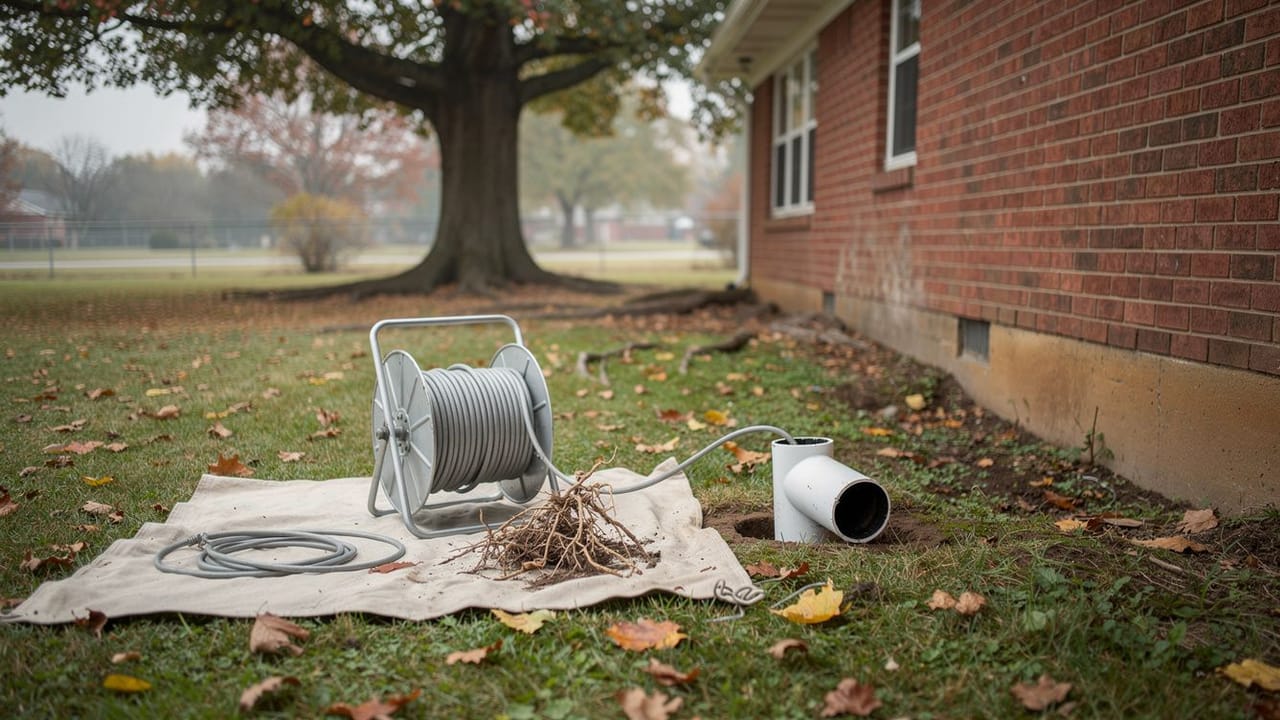
Older Nashville houses often have clay or cast iron laterals and newer ones plastic, but the build year is only a guess, and a camera survey confirms what is actually in the ground. On clay, the joints between sections are where we look for roots first. A root mass that has been cut back often returns, so on a line with known root intrusion we set a clearing interval from what the camera shows and how quickly the roots came back, instead of quoting a number off a price sheet. On older cast iron we look at the condition of the pipe wall on the same survey.
Two other things put a house in the scheduled group for us: large mature trees near the lateral run, and a history of backups. Two or more backups is our own threshold, not a published rule. Blockages matter beyond your own floor drain, too: the EPA lists blockages among the causes of sanitary sewer overflows and notes that those overflows can back up into homes, causing property damage and threatening public health.
Does a PVC sewer line need regular drain cleaning?
Usually not: a modern PVC lateral has far fewer joints than clay, and the solvent-welded ones we see rarely give roots a way in. A house on PVC with no history of backups does not, in our view, need a scheduled cleaning, and paying for one every year is buying a service against a problem you do not have.
For those houses we tell owners to call on symptoms: more than one fixture draining slowly at once, a toilet that gurgles when the bath drains, or any backup at all. If the gurgling only shows up in a storm, our post on drains that gurgle when it rains walks through that case. One slow sink on its own usually points to that sink’s trap rather than the lateral.
Why the camera matters more than the cleaning
Clearing a line tells you it flows today. A camera survey is how we see why it stopped and whether it is likely to stop again, whether that is roots at a particular joint, a sag holding water, a crushed section or buildup on the pipe wall. That is the difference between a recurring bill and a decision.
If you have had two backups, we would put the next spend into a camera survey rather than a third clearing. It is the clearest way we know to find out whether you are maintaining a line or postponing a sewer line repair or replacement.
What habit keeps a drain line clear?
Grease is the habit we would change first. Metro Water Services’ residential grease sheet warns that fats, oils and grease put down a sink or toilet can clog your own plumbing and back sewage up into your home or your neighbor’s, and Metro’s grease management page says the same about private plumbing lines. The sheet’s routine is easy to keep: pour used cooking grease into a small container, let it cool and harden, cap it, bag it and put it in the trash, dry-wipe pots, pans and plates before they go in the sink or dishwasher, and run a garbage disposal as little as possible. As for wipes, the EPA’s septic care page puts non-flushable wipes, including baby wipes and other wet wipes, on its list of things never to flush. That page is written for septic systems; on a city sewer connection our advice is the same, keep wipes out of the toilet.
Enzyme treatments are something we neither sell as a cure nor rely on to open a line; a blockage that is already there gets cleared mechanically first. Caustic drain cleaners are a different matter. The CDC’s guidance on sodium hydroxide notes that it is commonly present in commercial drain cleaners, that it liberates substantial heat when dissolved in water, and that it is corrosive to most metals, and the same EPA septic page advises against chemical drain openers for a clogged drain, pointing to a drain snake instead. On a lateral clog we skip the chemicals and put a cable and a camera on it. If your line has backed up more than once, get in touch through our contact page and we will tell you which kind of house you have.
Sources
- Metro Water Services, Residential Grease Information Sheet — Grease down a sink or toilet can clog your own lines and back sewage into your home or a neighbor’s; cool, cap and bag used grease; dry-wipe dishes; limit the garbage disposal
- Metro Water Services, Grease Management — Fats, oils and grease can cause clogs in private plumbing lines
- EPA, How to Care for Your Septic System — Never flush non-flushable wipes such as baby wipes or wet wipes; avoid chemical drain openers and use a drain snake (septic context)
- EPA, Sanitary Sewer Overflows (SSOs) — Blockages among the causes of sewer overflows; overflows can back up into homes, damaging property and threatening public health
- CDC/ATSDR, Medical Management Guidelines for Sodium Hydroxide — Sodium hydroxide is common in commercial drain cleaners, liberates substantial heat when dissolved in water, and is corrosive to most metals
FAQ
How Often Drains Actually Need Cleaning — questions
How do I know if my sewer line is clay or PVC?
The age of the house is a rough guide, since older homes are more likely to have clay or cast iron and newer ones plastic, but earlier repairs and replacements mean the build year alone cannot settle it. A camera survey settles it in one visit, and it is worth knowing before you buy a house with mature trees near the line.
Is a drain cleaning subscription worth it?
It depends on the line. On a clay lateral where roots keep coming back, regular clearing makes sense to us, though you can simply book it when it is due rather than subscribe. On a modern PVC line with no history of backups, we would not pay for one. Ask what a plan actually covers and whether a camera survey is included, because the survey is the part that produces information.
Do chemical drain cleaners damage pipes?
They can. The CDC’s guidance on sodium hydroxide, a common ingredient in commercial drain cleaners, says it gives off substantial heat when dissolved in water and is corrosive to most metals, and the EPA advises against chemical drain openers for a clogged drain. On a main line blockage we would leave them on the shelf and have the line cleared mechanically.
How often should sewer lines be cleaned?
Only as often as the line itself calls for. Where roots keep returning to a clay lateral, we set the interval from the camera footage and how quickly the roots grew back. A PVC lateral that has never backed up needs no schedule, just a call when several fixtures slow down together or a backup appears.